

Publications
Brazil in 2025 – Economic and Institutional Fundamentals
20/07/2026
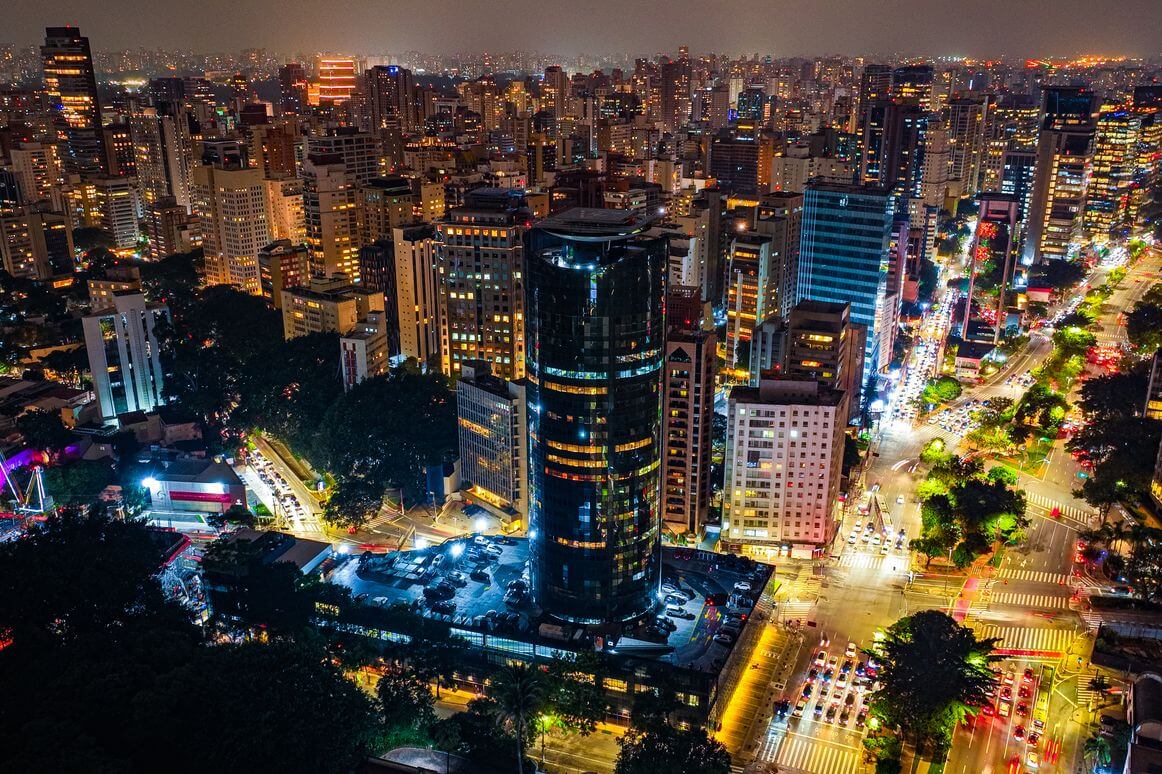
Economic and institutional fundamentals – Sector analysis. By the Brazil Committee of the CCE.
In a turbulent world, full of diplomatic and military tensions, Latin America, including Brazil, seems more than ever a region of opportunity, far from the crises in Europe, Asia, Africa and the Middle East.
France has an exceptional and unique export support tool through Team France Export, coordinated by the French Embassy in Brazil: the Brazil Committee of the CCE; the Regional Economic Service; the France–Brazil Chamber of Commerce and Industry; Business France; the French Development Agency; Bpifrance; Atout France; French Tech; the INPI; the customs attaché.
This summary is part of a broader work carried out by the CCE of the Brazil Committee, under the coordination of Secretary General Bertrand de Solere, aimed at investors, professionals and anyone interested in trade and business in Brazil. The full Doing Business in Brazil 2025 guide is available in its entirety.
We would like to thank in particular the teams of the Regional Economic Service (SER) for their support and contribution to the review of this work.
Frédéric Junck
Chairman of the Brazil Committee of the CCE
1 – The French Foreign Trade Advisors (CCE)
The French Foreign Trade Advisors (Conseillers du Commerce Extérieur de la France, CCE) are volunteer professionals selected by the French government for their expertise in international trade. Coming from a wide range of sectors, they support French companies in their international development, making their network and experience available. Their mission rests on four pillars: advising public authorities to strengthen France’s economic competitiveness, supporting companies in their export strategy, training young talent through educational programs and mentoring, and promoting France’s economic attractiveness abroad. With a presence in more than 150 countries, the CCE play a key role in strengthening trade and French economic influence worldwide, while helping to address the challenges of globalization and economic transition.
The Brazil Committee has 50 members, including representatives of major French multinationals from different economic sectors such as retail, energy, infrastructure, defense, environment, logistics and transport, banking, insurance, healthcare, consumer goods, agribusiness, communication, cosmetics, tourism, education, human resources and the automotive industry. French entrepreneurs based in Brazil complete the committee, chaired by Frédéric Junck together with a board of 10 members.
2 – French presence in Brazil
In September 2024, in a single week, three French groups announced USD 4 billion in investments and contracts in Brazil, strengthening their presence across several key sectors. CMA–CGM acquired 48% of Santos Brasil, the leading port operator and owner of the largest container terminal in South America, for USD 2.4 billion. VINCI won the concession for a strategic highway linking Belo Horizonte to Cristalina, committing to invest USD 1.2 billion. ENGIE won a tender to build 780 km of power transmission lines across several states, with an investment of USD 550 million, consolidating its position as the leading private energy player in Brazil.
Beyond these recent transactions, France’s presence in Brazil is historic and solid. With more than 1,150 subsidiaries and USD 44 billion in cumulative investment, France is the 4th largest foreign investor in Brazil. French groups employ more than 500,000 people in Brazil, making French companies the country’s leading private employers.
Brazil, with its 213 million inhabitants, together with Mercosur, is a strategic market for French investors. Companies there often enjoy high operating margins in a stable political and legal environment, even though patience and strong financial capacity are often required.
Finally, Brazil and Latin America remain far from the major conflicts that seem to be destabilizing the Western world.
3 – General overview of Brazil
- The world’s 5th largest country, with 8.5 million km²; the world’s 6th most populous country, with 213 million inhabitants; the largest economy in Latin America; the world’s 9th largest GDP in 2023, behind Italy and ahead of Canada (according to IMF projections from October 2024).
- Monetary stability: since the end of hyperinflation in 1993, Brazil has followed an economic policy based on a “tripod”: (i) a floating exchange rate, (ii) an inflation target, and (iii) fiscal balance. This framework has been adopted by every government since Fernando Henrique Cardoso, ensuring economic stability. However, in 2024 Brazil faced challenges: extraordinary spending linked to climate disasters widened the fiscal deficit, triggering a devaluation of the real.
- Drivers of Brazilian growth: Brazilian productivity has grown only 20% over 40 years, compared with 65% in the United States. Historically, the Brazilian economy has favored protectionist structures, limiting competitiveness. The productivity gains of the last 40 years stem from (i) urbanization, (ii) population growth, (iii) women entering the labor market, and (iv) improved workforce training. Since 2010, it is above all agribusiness that has been growing strongly.
- Investment needs: Brazil’s investment rate, at 17.8% in 2022, is below the world average and that of comparable countries, generating an estimated investment gap of USD 80 billion per year. Budgetary and constitutional constraints limit the capacity for public intervention, forcing the government to work with the private sector and banks to finance development needs such as basic sanitation. Despite being the world’s 9th largest economy, Brazil is still catching up.
- Public instruments: Brazil uses various instruments to promote development. Constitutional funds finance regional projects with USD 12 billion in 2023, insufficient to meet demand. Public and development banks, including BNDES with a portfolio of more than BRL 550 billion (USD 90 billion), play a key role, as do multilateral (IDB, NDB) and bilateral (AFD) development banks. Tax incentives, worth USD 106 billion, support infrastructure but are criticized for their inefficiency.
- Foreign investment: foreign investment (USD 62.4 billion in 2023) is crucial for Brazil, offsetting a traditional current account deficit (–USD 24.5 billion in 2023) and strengthening the balance of payments. With gross fixed capital formation needs estimated at 20% of GDP to sustain growth, but an investment rate stagnant at 17%, the country remains attractive thanks to an equal legal regime for foreign capital, favorable taxation and simplified entry conditions.
- Political structure: upon the return to democracy in 1985, Brazil adopted a federal presidential system inspired by the United States, but with a formal Constitution imposing uniform social and economic standards. Brazil’s centrifugal federalism sits midway between French decentralization and American centripetal federalism. Federal laws take precedence over state and municipal rules. Politically, the country is fragmented, with more than 20 parties represented in Congress, lacking party discipline, yet capable of major reforms by consensus. The Supreme Court holds strong sway over the executive branch and other institutions.
- Recent reforms: Brazil is modernizing rapidly, integrating technological advances and legal reforms. Innovations such as PIX, fintechs and the digitalization of public services are strengthening its efficiency. Legally, major reforms have been implemented: the 2017 labor reform made employer–employee relations more flexible, the 2019 economic freedom law reduced red tape, and the 2023 tax reform simplifies a complex system with a single VAT, promising higher growth. Laws such as the LGPD (data protection) and the anti-corruption law strengthen transparency. In 2021, a legal framework for startups was created, fostering innovation. The 2017 immigration law facilitates attracting talent, essential to counter an aging population. These measures, combined with modern infrastructure and a more attractive legal environment, position Brazil as a promising market for investors.
4 – Sector analysis
- Human resources and the labor market: in the third quarter of 2024, Brazil’s labor market counted 103 million employees, marked by high informality and a shortage of skilled workers in key sectors such as technology and engineering. The services sector dominates the economy (70% of GDP), followed by industry and agriculture. The 2017 labor reform introduced greater flexibility in hiring and dismissals, simplifying procedures.
- Vocational training: vocational training in Brazil is critical given a historically low unemployment rate (6.4% in the third quarter of 2024) and a shortage of skilled labor. In 2024, companies invested BRL 1,200 per employee, still below international standards. The France–Brazil Year 2025 offers opportunities for French companies.
- Internet and e-business: Brazil has 188 million internet users (88% of the population) and 144 million social media users. E-commerce generated USD 37 billion in 2023. Fintechs are revolutionizing payments with solutions such as Pix and Drex, strengthening financial inclusion.
- Civil construction (cement and ceramic tiles): cement, the world’s 6th largest producer, produced 62 million tonnes in 2023. Ceramic tiles, the world’s 3rd largest producer, generate 800 million m²/year.
- Architecture and urban planning: Brazil’s construction sector offers major opportunities but requires an understanding of its specific features. Public procurement is complex and dominated by the private sector, which influences urban planning and master plans.
- Sanitation: in 2022, 48% of Brazilians lacked access to sanitation services and 17% lacked access to treated water. A 2020 law ended the public sector’s monopoly on sanitation, setting universal access targets by 2033 and requiring USD 160 billion in investment.
- Energy: Brazil has a largely renewable energy matrix (90%), with installed capacity of nearly 237 GW, mainly hydroelectric (49%) and solar/wind (34%). It is also a key player in oil (3.6 million barrels/day) and biofuels, and is positioning itself in green hydrogen.
- Agriculture and the environment: a historic and economic pillar, Brazilian agriculture dominates several global markets (soybeans, corn, coffee, meat). 75% of the country’s greenhouse gas emissions come from land-use change. The carbon market is developing through voluntary credits (REDD+, biochar) and a mandatory regulated market.
- Beauty and personal care: Brazil, the world’s 3rd largest beauty and personal care market, is worth BRL 125 billion in 2024, dominated by Natura, Boticário, Unilever, L’Oréal and a network of SMEs.
- Health: Brazil, the world’s 9th largest pharmaceutical market, represented USD 40 billion in 2023, with annual growth of +10%. The public system (SUS) covers 75% of the population, while the private sector serves 25% through health plans.
- Tourism: in 2023, international tourism in Brazil attracted 5.9 million visitors, generating USD 6.9 billion. In 2024, international arrivals grew 12% (January–September), reaching 4.9 million visitors. The 2024–2027 National Tourism Plan targets 8.1 million foreign tourists per year by 2025.
- Insurance: CNP Assurances, a historic French player in the insurance industry, has been present in Brazil for 23 years, where it generates 20% of its global results. With BRL 34.7 billion in revenue in 2023 and more than 23 million contracts, CNP ranks 4th in the country.
Contributors – French Foreign Trade Advisors of the Brazil Committee
- Greg Bousquet – Founder, Architects Office (AO)
- Alexandrine Brami – Chair, LINGOPASS
- Olivier Colas – Managing Partner, Funchal Investimentos
- Thomas Dubaere – CEO, ACCOR Americas
- Virginie Fernandez – Partner, OMTARE
- Mathieu Fitoussi – Chairman, SERVIER Brazil
- Manuel Flahault – General Manager South America, Air France KLM
- Hubert Guarino – Healthcare Expert and Chairman, SCG
- Dominique Hautbergue – Regional Director Brazil/Southern Cone, AFD
- Patrick Hollard – MD Latin America, Africa and Middle East, MICHAEL PAGE
- Frédéric Junck – Chairman, CCE Brazil
- Yves Keller – CEO, VICAT Latin America
- Robert Klein – CEO Brazil and Mexico, VOLTALIA
- Lara Krumholz – Managing Director, Dailymotion
- David Montmasson – CEO, SAFRAN Electronics & Defense Brazil
- Geneviève Poulingue – Director, SKEMA Brazil
- Pedro Prádanos Zarzosa – Chairman, VEOLIA Brazil
- Maximiliano Villanueva – CEO, CNP Assurances Latin America
- Michael Reins – CEO, OBRAMAX
- Patrick Sabatier – Director of Institutional Relations, L’Oréal Latin America
- Bertrand de Solere – Secretary General, CCE Brazil
This summary is part of the Doing Business in Brazil 2025 guide (“Investir au Brésil en 2025”), published by the Brazil Committee of the French Foreign Trade Advisors, under the coordination of Bertrand de Solere. The original, French-language version is available at: solerelaw.com.
Related

ENG By Bertrand de Solere The equity method of accounting, as provided for under Article 77 of Law 12.973/2014, is one of the most significant […]

ENG By Bertrand de Solere Less than 30 days before the deadline for filing income tax returns with Brazil’s Federal Revenue Service, it is worth […]

By Fabricio Faggiani Dib and Leonardo Platais The Brazilian National Civil Aviation Agency (ANAC) has definitively implemented SEI-ANAC as the official platform for the processing […]